Buy nicaragua-online.com ?
We are moving the project
nicaragua-online.com .
Are you interested in purchasing the domain
nicaragua-online.com ?
domain@kv-gmbh.de · 0541-91531010
Buy nicaragua-online.com ?
Why are burkinis banned on some beaches in certain countries?
Burkinis are banned on some beaches in certain countries due to concerns about religious expression, cultural integration, and security. Some countries view the burkini as a symbol of religious conservatism and a challenge to secular values, leading to its prohibition in public spaces. Additionally, there are concerns about the integration of Muslim communities and the visibility of Islamic dress in public spaces. Finally, security concerns have also been cited as a reason for banning burkinis, as they can make it difficult to identify individuals in certain settings. **
Which culture is most similar to German culture, excluding the following countries?
The culture most similar to German culture, excluding the neighboring countries of Austria, Switzerland, and the Netherlands, would likely be Scandinavian culture. Countries such as Denmark, Sweden, and Norway share similarities with German culture in terms of their strong work ethic, emphasis on punctuality, and love for outdoor activities. Additionally, they also share similar values in terms of social welfare and a focus on environmental sustainability. These countries also have a similar approach to food and drink, with a love for hearty, traditional dishes and a strong beer culture. **
Similar search terms for Countries
Top-Angebote
Products related to Countries:


-
What does table culture look like in four specific countries?
Table culture varies greatly from country to country. In Japan, table culture is highly ritualized, with a focus on presentation and aesthetics. Meals are often served in small, beautifully arranged dishes, and there are specific customs around the use of chopsticks. In Italy, meals are a social event, with a focus on family and community. It is common for multiple generations to gather around the table for a leisurely, multi-course meal. In India, table culture varies by region, but generally, meals are eaten with the hands and shared from communal dishes. There is also a strong emphasis on hospitality and generosity when hosting guests. In the United States, table culture is more informal, with an emphasis on efficiency and convenience. Meals are often eaten quickly, and there is a wide variety of cuisines and dining styles due to the country's diverse population. **
-
Which countries are Balkan countries?
The Balkan countries are located in the southeastern region of Europe and include Albania, Bosnia and Herzegovina, Bulgaria, Croatia, Greece, Kosovo, Montenegro, North Macedonia, Romania, Serbia, and Slovenia. These countries are characterized by their diverse cultures, histories, and landscapes, and are often considered a bridge between the East and the West. The term "Balkan" is derived from the Balkan Mountains, which run through the region. **
-
Which Balkan countries are Islamic countries?
The Balkan countries with a significant Muslim population are Albania, Bosnia and Herzegovina, and Kosovo. These countries have a long history of Islamic influence and have a majority Muslim population. Islam has played a significant role in shaping the culture, traditions, and architecture of these countries. While other Balkan countries also have Muslim communities, these three countries are considered Islamic countries due to their majority Muslim population. **
-
What are industrialized countries and developing countries?
Industrialized countries are those that have advanced infrastructure, technology, and high levels of income and standard of living. These countries have highly developed economies and industries, and typically have a high level of urbanization and access to modern amenities. Developing countries, on the other hand, are those that are still in the process of industrialization and have lower levels of income and standard of living. These countries often have less advanced infrastructure and technology, and may have a higher proportion of their population engaged in agriculture. Developing countries are working towards improving their economic and social conditions to reach the level of industrialized countries. **


'Neighboring countries'
Neighboring countries are countries that share a border with each other. These countries often have close geographical, cultural, and economic ties due to their proximity. Neighboring countries may have agreements in place to facilitate trade, travel, and cooperation on various issues. It is important for neighboring countries to maintain good relations in order to promote peace and stability in the region. **
Neighboring countries
Neighboring countries are countries that share a common border or are geographically close to each other. These countries often have cultural, economic, and political ties due to their proximity. Neighboring countries frequently engage in trade, travel, and diplomatic relations to foster cooperation and mutual understanding. However, disputes over borders, resources, or historical conflicts can also arise between neighboring countries. **
Top-Angebote
Products related to Countries:
-
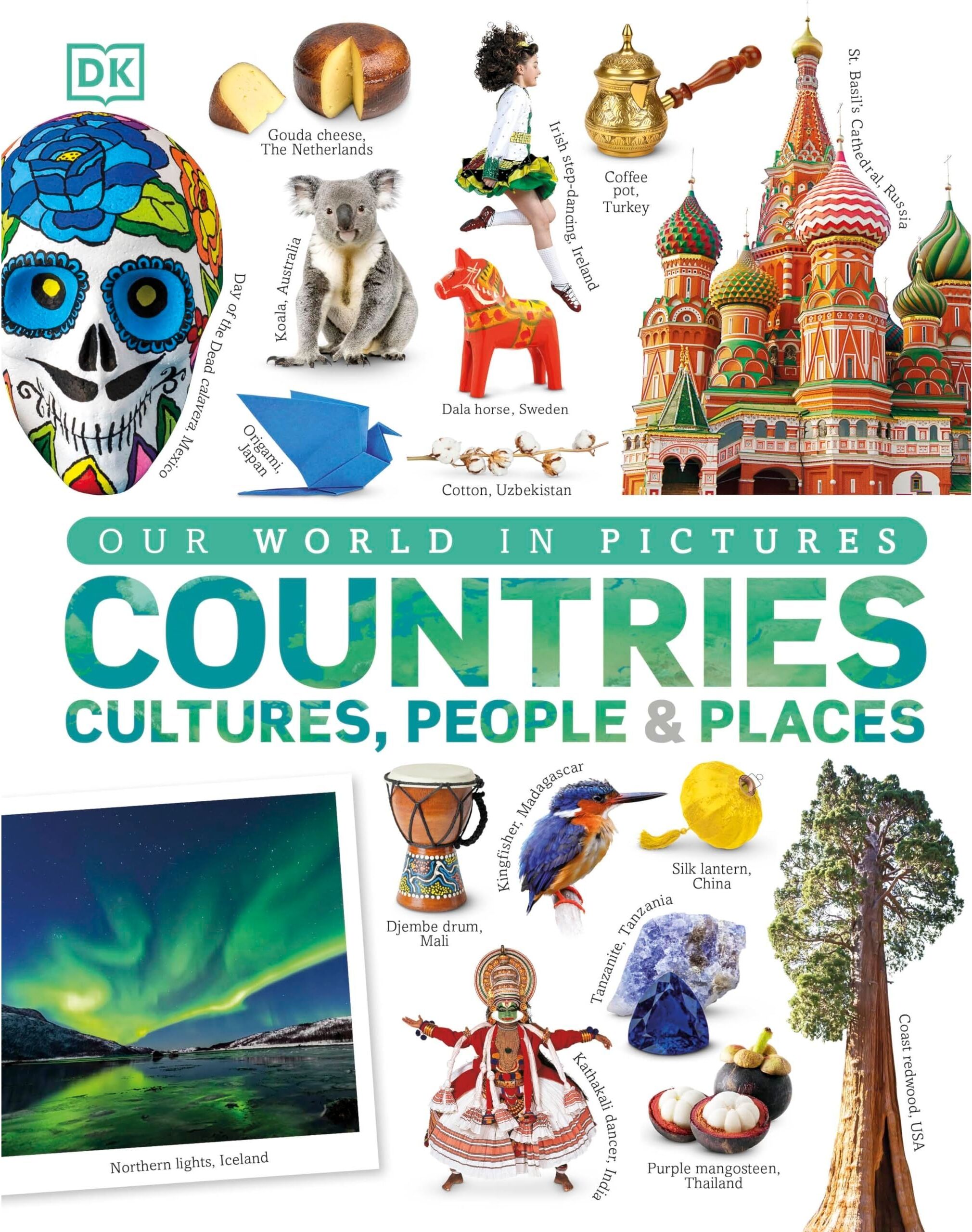
DK Our World in Pictures: Countries, Cultures, People and Places: A Visual Encyclopedia of the WorldPacked with more than 1,000 incredible images and full of fascinating facts, this beautiful children's book takes you on an exciting round-the-globe tour, with a stopover in every nation on every continent! Did you know that Cuba's national sport is baseball, one of the most popular sports in the US? And that kids in both Japan and Chile have earthquake drills on their school schedule? Find out about anything from the spookily vibrant Day of the Dead parade in Mexico and the beautiful springtime cherry blossom displays of Japan, to blueberry-picking in Sweden and India's space programme. Discover the countries of the world - explore their geography, wildlife, traditions, and arts, in this picture-packed children's book. Every country profile is full of photos, and each nation has a full-colour map detailing its main cities, landscape features, and borders, and exactly where in the world they are, in this engaging encyclopedia for children aged 9-12. Celebrate your child's curiosity as they explore: -Striking and detailed diagrams, drawings and illustrations on every page -A highly visual approach to learning -Ideal combination of colourful diagrams with infographic text boxes This captivating kids encyclopedia tackles our weird and wonderful world continent by content, with informative profiles for each of the 196 nations of the world and striking illustrations, photographs and diagrams featured throughout provide an optimum visual learning experience for both children and adults alike, accompanied by an array of fun facts from around the globe! This world encyclopedia includes at-a-glance panels that provide a quick reference to all the stats, making this engaging encyclopedia for kids an ideal combination of colourful diagrams and infographic text boxes with easy-to-read accessible text for readers aged 9-12, yet can be enjoyed by the entire family, making this enthralling children's encyclopedia a beautiful and educational gift that can be passed down generations.7,85 £*Shipping: 2,99 £Secure redirect to the provider
-
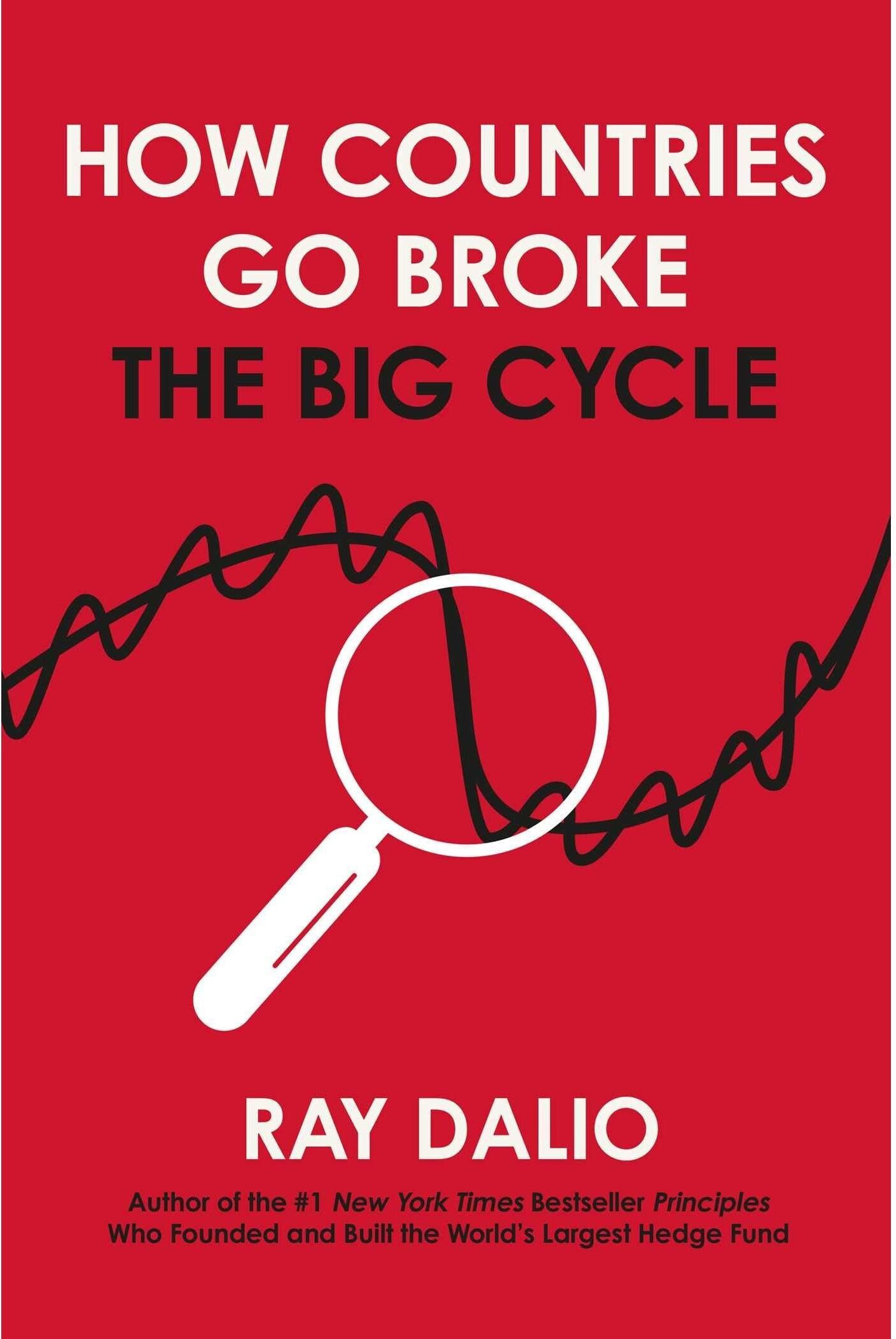
Simon and Schuster UK How Countries Go Broke: Principles for Navigating the Big Debt Cycle, Where We Are Headed, and What We Should DoAn urgent warning about the global economy from Ray Dalio, the #1 New York Times bestselling author of Principles. Do big government debts threaten our collective well-being? Are there limits to debt growth? Can a big, important reserve currency country like the United States really go broke – and what would that look like? For decades, politicians, policymakers and investors have debated these questions, but the answers have eluded them. In this groundbreaking book, Ray Dalio, one of the greatest investors of our time who anticipated the 2008 global financial crisis and the 2010–12 European debt crisis, shares for the first time his detailed explanation of what he calls the 'Big Debt Cycle'. Understanding this cycle is critical for helping policymakers, investors and the general public grasp where we are and where we are headed with the debt issue. Dalio's model points toward surprisingly straightforward solutions for dealing with the debt problems that the US, Europe, Japan and China face today. How Countries Go Broke also shows how these debt problems are related to the other forces – political within countries, geopolitical between countries, natural (droughts, floods and pandemics) and technological (most importantly, AI) – that together are causing what Dalio calls the 'Overall Big Cycle' changes in the world order. By reading this book, you will improve your understanding of what's happening now and what to do about it.17,99 £*Shipping: 2,99 £Secure redirect to the provider
-
Why are burkinis banned on some beaches in certain countries?
Burkinis are banned on some beaches in certain countries due to concerns about religious expression, cultural integration, and security. Some countries view the burkini as a symbol of religious conservatism and a challenge to secular values, leading to its prohibition in public spaces. Additionally, there are concerns about the integration of Muslim communities and the visibility of Islamic dress in public spaces. Finally, security concerns have also been cited as a reason for banning burkinis, as they can make it difficult to identify individuals in certain settings. **
-
Which culture is most similar to German culture, excluding the following countries?
The culture most similar to German culture, excluding the neighboring countries of Austria, Switzerland, and the Netherlands, would likely be Scandinavian culture. Countries such as Denmark, Sweden, and Norway share similarities with German culture in terms of their strong work ethic, emphasis on punctuality, and love for outdoor activities. Additionally, they also share similar values in terms of social welfare and a focus on environmental sustainability. These countries also have a similar approach to food and drink, with a love for hearty, traditional dishes and a strong beer culture. **
-
What does table culture look like in four specific countries?
Table culture varies greatly from country to country. In Japan, table culture is highly ritualized, with a focus on presentation and aesthetics. Meals are often served in small, beautifully arranged dishes, and there are specific customs around the use of chopsticks. In Italy, meals are a social event, with a focus on family and community. It is common for multiple generations to gather around the table for a leisurely, multi-course meal. In India, table culture varies by region, but generally, meals are eaten with the hands and shared from communal dishes. There is also a strong emphasis on hospitality and generosity when hosting guests. In the United States, table culture is more informal, with an emphasis on efficiency and convenience. Meals are often eaten quickly, and there is a wide variety of cuisines and dining styles due to the country's diverse population. **
-
Which countries are Balkan countries?
The Balkan countries are located in the southeastern region of Europe and include Albania, Bosnia and Herzegovina, Bulgaria, Croatia, Greece, Kosovo, Montenegro, North Macedonia, Romania, Serbia, and Slovenia. These countries are characterized by their diverse cultures, histories, and landscapes, and are often considered a bridge between the East and the West. The term "Balkan" is derived from the Balkan Mountains, which run through the region. **
Similar search terms for Countries
-
Which Balkan countries are Islamic countries?
The Balkan countries with a significant Muslim population are Albania, Bosnia and Herzegovina, and Kosovo. These countries have a long history of Islamic influence and have a majority Muslim population. Islam has played a significant role in shaping the culture, traditions, and architecture of these countries. While other Balkan countries also have Muslim communities, these three countries are considered Islamic countries due to their majority Muslim population. **
-
What are industrialized countries and developing countries?
Industrialized countries are those that have advanced infrastructure, technology, and high levels of income and standard of living. These countries have highly developed economies and industries, and typically have a high level of urbanization and access to modern amenities. Developing countries, on the other hand, are those that are still in the process of industrialization and have lower levels of income and standard of living. These countries often have less advanced infrastructure and technology, and may have a higher proportion of their population engaged in agriculture. Developing countries are working towards improving their economic and social conditions to reach the level of industrialized countries. **
-
'Neighboring countries'
Neighboring countries are countries that share a border with each other. These countries often have close geographical, cultural, and economic ties due to their proximity. Neighboring countries may have agreements in place to facilitate trade, travel, and cooperation on various issues. It is important for neighboring countries to maintain good relations in order to promote peace and stability in the region. **
-
Neighboring countries
Neighboring countries are countries that share a common border or are geographically close to each other. These countries often have cultural, economic, and political ties due to their proximity. Neighboring countries frequently engage in trade, travel, and diplomatic relations to foster cooperation and mutual understanding. However, disputes over borders, resources, or historical conflicts can also arise between neighboring countries. **
* All prices are inclusive of VAT and, if applicable, plus shipping costs. The offer information is based on the details provided by the respective shop and is updated through automated processes. Real-time updates do not occur, so deviations can occur in individual cases. ** Note: Parts of this content were created by AI.